
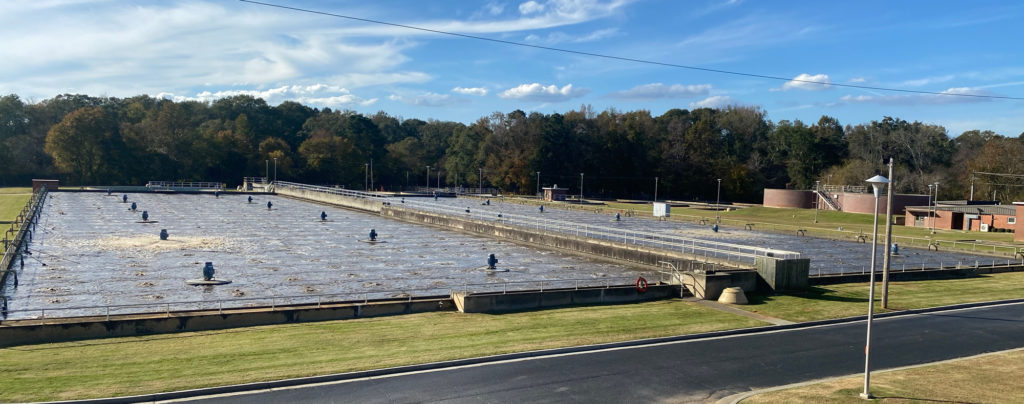
The City of Carrollton owns and operates a 7 million gallon per day waste water treatment facility. Treatment is accomplished via a mechanical pretreatment facility, a solids dewatering process and a spray irrigation system.
In order to effectively comply with all applicable federal, state and local regulations all industrial waste as well as food service discharges are monitored by the waste water department staff.
Currently, the facility treats an average of 3.5 million gallons each day. The facility was awarded the Georgia Association of Water Professionals’ “Platinum Award” for the past 14 consecutive years. This award illustrates the dedication and commitment of the staff of the wastewater department.
Not Rain? No Drain!
When there’s heavy rain, the runoff goes down storm drains and directly into our local rivers, lakes, creeks and other bodies of water. That includes pollutants on the ground and substances like oil, grass clippings and trash. Rain is the only thing that belongs in a storm drain.
Recycling is a great way to keep household wastes like paints, solvents and related products from poisoning the places you like to swim, fish or visit. Read and follow directions on how to use a product, recycle what’s left over (or dispose of it according to local waste management procedures) and dispose of the container. Use a pet waste bag (biodegradable if possible) to keep pet waste out of our water.
Remember: If you don’t want it in your water, keep it out of the storm drain!
For more information visit: Water Environment Federation
10 Ways You can Help be the Solution to Water Pollution

Put Your Drain on a Fat-Free Diet
When Fats, Oil and Grease (FOG) go down the drain, they clog pipes, create odors and can cause sewer backups. Follow these simple steps to eliminate FOG from your drains:

WIPE IT
Wipe cooking oil, butter, sauces and salad dressing off cooking equipment using paper towels before washing.

TOSS IT
Scrape and toss any leftover solid food into the food bin before washing the dishes or putting them in the dishwasher.

CLEAN IT
Monitor your grease trap weekly. Use a turkey baster to measure the grease build-up